
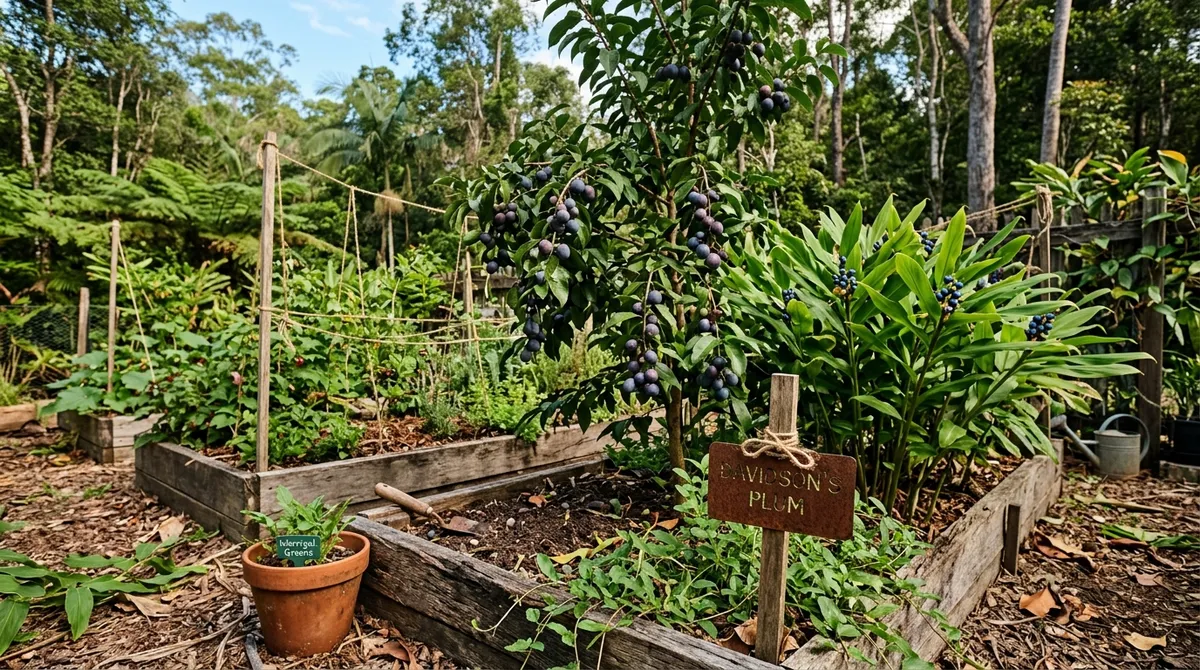
Growing Native Edibles in North Queensland
Kakadu plum, Davidson plum, bunya nut, lemon myrtle, and rainforest species for Cairns, the Tablelands, and Townsville
North Queensland is one of the best places in Australia to grow native edible plants. The wet tropics around Cairns and the Atherton Tablelands are home to ancient rainforest species that have been food sources for thousands of years. Many of these plants grow naturally in the region, which means they are already adapted to the soils, rainfall, and temperatures. Growing them in a home garden requires less water, fewer inputs, and far less effort than introduced crops.
The range of native edibles suited to North Queensland is enormous. Rainforest fruits, nuts, leafy greens, and aromatic species all thrive here. Some produce fruit within two years. Others, like bunya pines, are long-term investments that reward patience with massive harvests.
Top Native Edibles for North Queensland
Davidson Plum (Davidsonia jerseyana and D. pruriens)
Davidson plum is a standout rainforest fruit tree for the wet tropics. The North Queensland species (D. pruriens) grows naturally in the Daintree and Atherton Tablelands rainforests. Trees reach 5-8 metres and produce clusters of dark purple fruit directly from the trunk and older branches. The fruit is intensely sour and rich in antioxidants, excellent for jams, sauces, and syrups.
Plant Davidson plum in a sheltered, partly shaded position with rich, moist soil. It performs best in the Cairns hinterland and Tablelands where rainfall exceeds 1500mm annually. In Townsville, it needs irrigation through the dry season and protection from hot western sun. Mulch heavily with rainforest leaf litter or wood chips. Trees fruit from the third or fourth year.
Kakadu Plum (Terminalia ferdinandiana)
Kakadu plum holds the record for the highest vitamin C content of any fruit in the world. It grows as a small deciduous tree (6-10 metres) and suits the drier parts of North Queensland, including Townsville, Charters Towers, and inland areas. It handles clay soils, seasonal drought, and full sun. The small yellow-green fruit ripens from December to March, coinciding with the wet season.
Plant in full sun with good drainage. Kakadu plum tolerates Townsville's heavy clay soils better than most native fruit species. Water through the first two dry seasons while the tree establishes. After that, rainfall is usually sufficient. Fruit production begins around year four.
Lemon Myrtle (Backhousia citriodora)
Lemon myrtle is the most commercially successful native herb in Australia, and it grows superbly across North Queensland. The leaves contain citral, giving them an intense lemon flavour that works in teas, cooking, and baking. Trees reach 4-8 metres but respond well to regular harvesting, which keeps them compact and bushy.
It grows well in Cairns, Innisfail, Mackay, and the Atherton Tablelands. In Townsville, provide afternoon shade and consistent moisture. Plant in well-drained soil enriched with compost. Harvest leaves year-round, though flavour is strongest in the warm months. Dry leaves in a shaded, airy spot for 3-5 days.
Bunya Nut (Araucaria bidwillii)
Bunya pines are majestic trees that eventually reach 30-40 metres, but they earn their space with enormous cones (up to 10 kilograms) filled with large, protein-rich nuts. The nuts taste similar to chestnuts and can be roasted, boiled, or ground into flour. Bunya pines grow naturally on the Atherton Tablelands and in the Eungella Range near Mackay.
This is a long-term planting. Trees take 10-15 years to produce their first cones and then crop heavily every 2-3 years. Plant in deep, well-drained soil with room to grow. Young trees need shade for the first few years. The Atherton Tablelands, with their deep volcanic soils and reliable rainfall, are ideal. Bunya pines also grow well in Cairns coastal gardens if given space.
Atherton Raspberry (Rubus probus)
This native raspberry grows wild in the wet tropics and produces sweet red fruit from December to April. The canes reach 2-3 metres and need a support structure. Unlike introduced raspberries, Atherton raspberry thrives in tropical heat and humidity. It grows best in the Tablelands, Cairns hinterland, and Mackay hinterland at elevations above 400 metres.
Plant in partial shade with moist, humus-rich soil. Mulch heavily and water through dry spells. Prune spent canes after fruiting to encourage new growth. Birds love the fruit, so netting is recommended during the harvest season.
Establishing a Native Edible Garden
The key to success with native edibles is matching species to your specific location within North Queensland. The region spans a wide range of conditions, from the dry savannah around Townsville to the wet tropics of Cairns and the cool elevation of the Atherton Tablelands.
- Townsville and dry coastal areas: Focus on savannah and dry woodland species. Kakadu plum, native ginger (Alpinia caerulea), lemon aspen (Acronychia acidula), and bush tucker species adapted to lower rainfall.
- Cairns and wet coastal areas: Rainforest species thrive here. Davidson plum, lemon myrtle, Atherton raspberry, native tamarind, and cluster fig.
- Atherton Tablelands (700-800 metres elevation): The cooler climate suits the widest range. All the species above grow well at altitude, plus macadamia, finger lime, and bunya nut.
- Mackay region: A transition zone. Lemon myrtle, Kakadu plum, and native ginger all grow well. Davidson plum works in sheltered positions with extra water.
Planting and Care
Plant native edibles at the start of the wet season (November to December) so they establish during the natural rainfall period. This reduces the need for hand watering and allows roots to develop before the dry season arrives.
Prepare planting holes at least twice the width of the root ball. Mix existing soil with compost and aged wood chips. Avoid adding synthetic fertilisers, which can burn the fine root systems of many native species. A slow-release native plant fertiliser (low in phosphorus) applied once in spring is sufficient for most species.
Mulch is essential. Apply 10-15 centimetres of coarse wood chip mulch around each plant, keeping it 10 centimetres away from the trunk. This mimics the natural rainforest floor, retains moisture, suppresses weeds, and feeds the soil as it breaks down. In the Townsville region, mulch breaks down faster due to heat, so replenish every 3-4 months.
Water newly planted trees through their first two dry seasons. Once established, most native edibles in the Cairns and Tablelands region survive on rainfall alone. In Townsville and Mackay, deeper watering every 7-10 days during the dry season keeps trees healthy and productive.
Harvesting and Using Native Edibles
Most native fruits in North Queensland ripen during the wet season (December to March), when the rest of the vegetable garden is at its quietest. This makes native edibles a valuable addition, filling the harvest gap when tomatoes, beans, and other dry-season crops are finished.
Davidson plum fruit drops when ripe. Collect from the ground daily, as fruit deteriorates quickly in tropical heat. Process or freeze within 24 hours. Kakadu plum fruit can be picked from the tree when it turns from green to yellow-green. Lemon myrtle leaves are harvested by cutting small branches and stripping the leaves. Bunya nuts are collected after the heavy cones fall naturally (stand well clear of trees during cone drop season).
Native edibles store well when frozen, dried, or preserved. Davidson plum makes outstanding jam. Lemon myrtle leaves dry easily and keep their flavour for 6-12 months in airtight containers. Bunya nuts freeze well for up to a year.
Pests and Problems
Native edibles generally have fewer pest and disease problems than introduced crops, because they have co-evolved with local insects and pathogens. Fruit fly is the main concern for fruiting species. Net Davidson plum and other fruit trees during the ripening period. Flying foxes and birds are attracted to ripe fruit, so netting serves double duty.
Fungal leaf spots can appear during the wet season, particularly on lemon myrtle. Good airflow, correct spacing, and avoiding overhead watering keep fungal issues manageable. Remove and dispose of heavily affected leaves.
Track Your Native Edible Garden
Get seasonal reminders for planting, harvesting, and caring for native species in North Queensland.
Open the Planting Season AppFrequently Asked Questions
What native edibles grow well in North Queensland?
Davidson plum, lemon myrtle, Atherton raspberry, and bunya nut all thrive in North Queensland's tropical climate. Kakadu plum grows well in drier areas around Townsville and inland. Rainforest species like Davidson plum and lemon myrtle prefer the wetter Cairns and Tablelands regions with some shade and consistent moisture.
Can I grow Kakadu plum in North Queensland?
Yes. Kakadu plum (Terminalia ferdinandiana) grows naturally across northern Australia and suits the drier parts of North Queensland. It handles Townsville's clay soils and seasonal drought well. Trees are slow to establish but extremely hardy once settled. Expect fruit from the third or fourth year.
Where can I buy native edible plants in North Queensland?
Several specialist nurseries in the Cairns and Atherton Tablelands region stock native edible species. Yuruga Nursery near Innisfail carries a wide range of rainforest food plants. Local markets in Kuranda and Mareeba sometimes have seedlings. Online suppliers like Daleys Fruit Tree Nursery ship to the region.
Do native edibles need much maintenance in North Queensland?
Most native edibles need minimal maintenance once established. They are adapted to local soils, rainfall patterns, and temperatures. Mulch heavily, water through the first two dry seasons, and avoid synthetic fertilisers. Pruning is usually limited to shaping and removing dead wood.
Free Monthly Planting Calendar
Get a personalised email each month with what to plant, seasonal tips, and harvest reminders for your region.
We send one email per month. Unsubscribe any time.